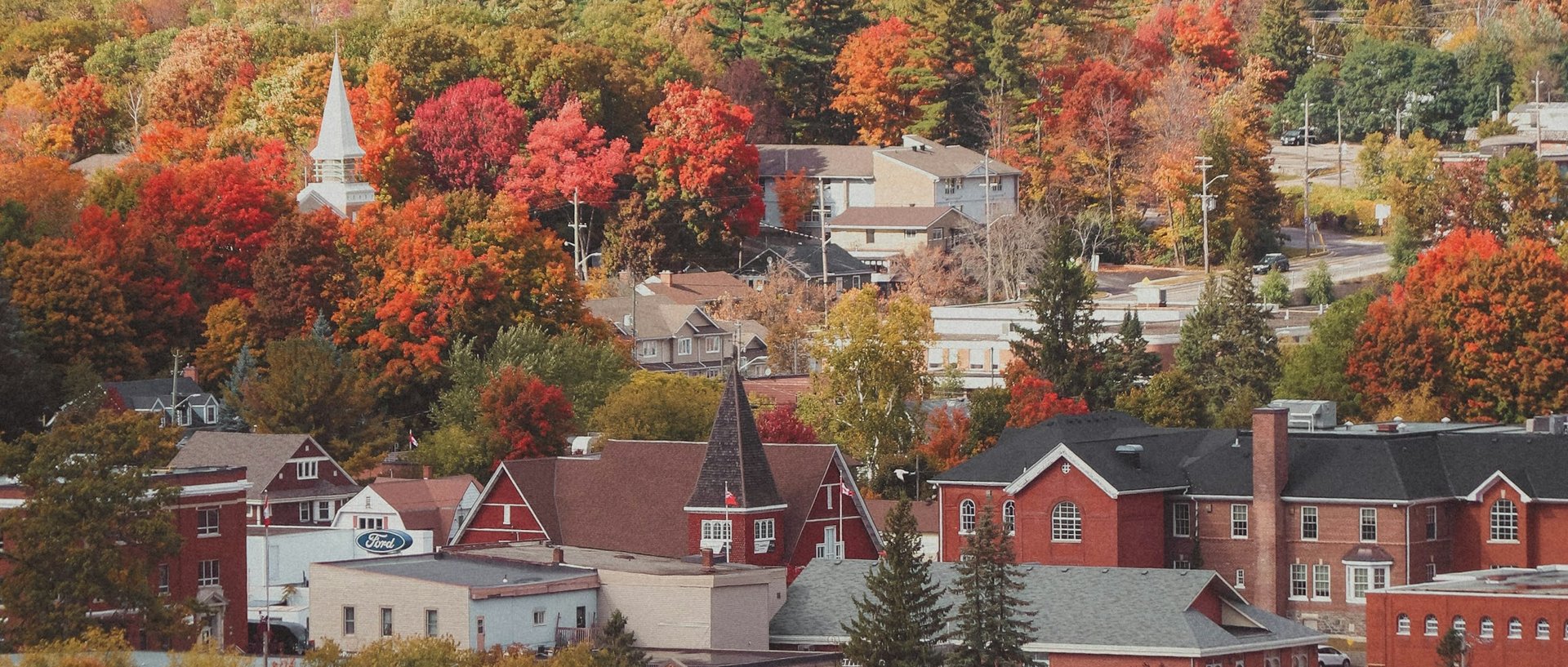

Retirement in Vermont
Retirees with modest incomes who qualify for Vermont's Social Security exemption and income-sensitized property tax credit, love four true seasons and small-town New England life, and are prepared for hard winters and above-average costs.
Fact text
- Vermont operated as an independent republic for 14 years before becoming the 14th state in 1791.
- Montpelier is the least populous state capital in the country.
- Vermont produces more maple syrup than any other state.
- Vermont's 1777 constitution made it the first place in America to outlaw adult slavery.


- Consistently ranks among the safest, healthiest states with strong civic life and low crime
- Classic New England scenery — Green Mountains, Lake Champlain, fall foliage — with abundant outdoor recreation in every season
- Social Security fully exempt for joint filers with AGI up to $65,000 (singles $50,000), covering many Vermont retirees
- Income-sensitized property tax credit ties school taxes to household income for residents
- One of the oldest populations in the nation (22.8% are 65+) — retirees are central to community life and services
- University of Vermont Medical Center provides academic-level care in Burlington, with Dartmouth Health just across the river in New Hampshire
- Low exposure to hurricanes, tornadoes, earthquakes, and wildfire compared with most states
- Cost of living about 13% above the U.S. average (index 113.0, Q1 2026) and a median sale price around $448,000 amid a severe housing shortage
- High taxes on middle-to-upper retirement incomes: graduated rates to 8.75%, full taxation of IRA/pension income, and Social Security taxed above modest thresholds
- Property taxes among the highest in the country at about 1.51% effective
- A $5 million estate tax with a flat 16% rate above the exemption
- Long, cold, snowy winters and mud season; heating costs are substantial
- Serious and repeated flood disasters — catastrophic statewide flooding in July 2023 and again in July 2024
- Healthcare capacity strains: UVM Medical Center faces major budget cuts and service reductions, and rural care access is thinning
Vermont is a retirement destination people choose with their hearts: village greens, the Green Mountains, Lake Champlain, and the most celebrated autumn in America. It is also one of the oldest states in the nation — 22.8% of its roughly 645,000 residents are 65 or older — so retirees are not an afterthought here; they are the fabric of most towns.
The financial picture demands more deliberation. Vermont's cost of living runs about 13% above the U.S. average, housing is scarce and expensive for a rural state, property taxes are among the nation's highest, and the state taxes Social Security above moderate income thresholds while taxing pensions and retirement account withdrawals in full at rates that top out at 8.75%. Repeated catastrophic flooding — in July 2023 and again in July 2024 — has added a climate dimension few associated with New England a decade ago.
The result is a state that treats lower-income retirees rather gently, through its Social Security exemption and income-based property tax credit, while asking affluent retirees to pay for the privilege of the view. Knowing which camp you fall into is most of the decision.
The Case for Retiring in Vermont
Quality of life is Vermont's core offer. The state routinely places near the top of national rankings for safety, health, and civic engagement; crime is low, communities are small and knit tightly, and outdoor life — skiing, hiking, cycling, paddling — is on the doorstep in every county. For retirees who want engagement rather than isolation, Vermont's town-meeting culture and dense volunteer networks are a genuine draw, and the large senior population means services, from senior centers to Meals on Wheels networks, are well established.
The tax code is kinder at moderate incomes than Vermont's reputation suggests. Social Security is fully exempt for married couples with AGI up to $65,000 (singles up to $50,000), with a phase-out above; many Vermont retirees pay no state tax on their benefits. The property tax credit ties resident education taxes to household income, cushioning the state's high nominal rates for those with modest means. Military retirees now fare well too — AARP's 2026 guide reports military retirement pay is exempt for AGI up to $125,000.
Healthcare quality has historically been strong, anchored by the University of Vermont Medical Center in Burlington, with Dartmouth Health's academic center serving the eastern side of the state from Lebanon, New Hampshire. There is no sales tax on groceries, clothing, or medicine, and the combined sales tax averages a modest 6.43%.
The Trade-Offs to Consider
Costs come first. Vermont's cost of living index of 113.0 (Q1 2026) is well above the national average, and the median home sale price of about $448,400 (mid-2026) reflects one of the tightest housing markets in the country — inventory is thin, and winter-worthy homes in desirable towns move fast. Heating a Vermont home through a six-month cold season is a four-figure annual line item.
Taxes come second for anyone above modest income. Pensions and IRA/401(k) withdrawals are fully taxable at graduated rates reaching 8.75%; Social Security loses its exemption entirely above $75,000 AGI (joint); the effective property tax rate of about 1.51% is among America's highest; and Vermont is one of the few states with an estate tax — a flat 16% on value above a $5 million exemption.
Climate risk has become concrete. The July 2023 floods devastated Montpelier and dozens of towns; almost exactly a year later, July 2024 flooding struck again. River-valley and village-center properties deserve careful flood-zone diligence and, often, flood insurance. Winters, while not a 'disaster,' are long, dark, and icy — a real consideration for aging in place.
Finally, healthcare capacity is under visible strain: regulators cut UVM Medical Center's budget in 2025, and the system has been losing money and trimming services in 2026, while small rural hospitals struggle. Care quality remains good, but waits are lengthening.
Taxes for Retirees in Vermont
Social Security: exempt for AGI up to $65,000 (married filing jointly) or $50,000 (other statuses), phasing out to $75,000 / $60,000, and fully taxable above — Vermont is one of the few states still taxing benefits at higher incomes.
Pensions and retirement accounts: fully taxable at Vermont's graduated rates of 3.35% to 8.75%. A $10,000 exclusion exists for CSRS or other government pensions not covered by Social Security (AGI limits of $75,000 joint / $60,000 others), but you may claim only one exemption — Social Security, CSRS, other eligible system, or military — even if several apply. Military retirement is treated more generously under recent law: exempt up to $125,000 AGI with a partial exemption to $175,000, per AARP's 2026 guide. Taxpayers 65+ also receive an extra standard deduction of about $1,000, and qualifying seniors can claim 24% of the federal elderly/disabled credit.
Sales tax: 6% state rate, about 6.43% average combined; groceries, clothing, and prescription drugs are exempt.
Property tax: about 1.51% effective on average — among the highest in the nation — driven by education taxes. Resident homeowners can qualify for the income-sensitized property tax credit, which is Vermont's main relief mechanism at any age; eligible disabled veterans receive an assessed-value exemption.
Estate tax: 16% flat rate on estate value above a $5 million exemption; no inheritance tax on heirs. Retirees with significant estates should plan with a professional — and everyone should confirm current thresholds with the Vermont Department of Taxes, as several provisions have changed recently.
Cost of Living and Housing
Vermont's 113.0 cost index makes it the most expensive state among this page's northern-tier peers, and housing is the pinch point: a mid-2026 median sale price near $448,400, minimal inventory, and old housing stock that can carry expensive surprises (heating systems, roofs built for snow load, septic). Chittenden County (Burlington) and ski-town orbits are priciest; the Northeast Kingdom and Rutland County offer relative value with thinner services. Budget honestly for heat, snow removal, and a capable vehicle.
Healthcare for Retirees
The University of Vermont Medical Center in Burlington provides the state's academic-level care, and eastern Vermonters routinely use Dartmouth Hitchcock Medical Center across the river. Regional hospitals in Rutland, Bennington, and elsewhere handle community needs. Vermonters are among the nation's healthiest, but the system is stressed: UVM Medical Center absorbed an $88 million regulator-ordered budget cut for 2026, has been losing hundreds of thousands of dollars a day, and is downsizing some services, while several rural hospitals operate on thin margins. Retirees should expect solid primary care, longer waits for some specialties, and meaningful drives to advanced care from the state's more remote corners.
Climate and Natural-Disaster Risk
Vermont's hazards are water and winter. Catastrophic flooding struck statewide in July 2023 and again in July 2024, and Tropical Storm Irene's 2011 damage remains in living memory — river-valley homes need flood-zone research and often flood insurance. Winter brings heavy snow, ice storms, and sustained cold, with the safety and mobility challenges those imply for older residents. On the other hand, Vermont has effectively no hurricane-force coastal exposure, negligible tornado and earthquake risk, and little wildfire threat — its risk profile is narrow but, in the flood dimension, increasingly serious.
Annuities and Retirement Income in Vermont
Annuity income is taxable in Vermont like other retirement income, at graduated rates — worth modeling alongside Social Security thresholds, since added income can push benefits out of the state exemption. For retirees seeking predictable income to pair with Social Security through long Vermont retirements (this is, after all, a state of long-lived residents), guaranteed-income products can play a useful role, weighed against their liquidity and cost trade-offs.
If a licensed insurer fails, the Vermont Life & Health Insurance Guaranty Association covers annuity benefits up to $250,000 in present value per contract owner — owning several contracts with one failed insurer does not multiply coverage.
Who Vermont Suits Best
Vermont suits retirees of modest income who value community, safety, and four honest seasons over low costs — the Social Security exemption and income-sensitized property tax credit are built for them — and hardy transplants who genuinely want winter, not merely tolerate it. It rewards people who choose housing carefully: outside flood plains, near a hospital, winterized. It is a difficult fit for affluent retirees with large pension or IRA incomes and estates near $5 million, for the cost-sensitive, and for anyone whose ideal retirement involves neither snow shovels nor wood stoves.
Does Vermont tax Social Security benefits?
Only above income thresholds. Benefits are fully exempt for married-joint filers with AGI up to $65,000 and other filers up to $50,000, with the exemption phasing out up to $75,000 and $60,000 respectively. Above those levels, Vermont taxes federally taxable benefits at its regular rates.
How does Vermont tax pensions and IRA or 401(k) withdrawals?
Fully, at graduated rates from 3.35% to 8.75%. A limited $10,000 exclusion applies to CSRS and other non-Social-Security-covered government pensions under income limits, and recent law treats military retirement generously (exempt up to $125,000 AGI per AARP's 2026 guide) — but only one of these exemptions may be claimed per return.
Is Vermont expensive for retirees?
Yes. Cost of living runs about 13% above the U.S. average (index 113.0, Q1 2026), the median home sale price was around $448,400 in mid-2026, and effective property taxes average roughly 1.51% of home value. Lower-income residents get meaningful relief through the income-sensitized property tax credit.
Does Vermont have an estate or inheritance tax?
Vermont has an estate tax but no inheritance tax. Estates above a $5 million exemption pay a flat 16% on the amount over the threshold, so retirees with substantial assets should plan with an estate professional.
What natural disaster risks should Vermont retirees consider?
Flooding is the big one — catastrophic statewide floods hit in July 2023 and again in July 2024, and Tropical Storm Irene caused major damage in 2011. Severe winter storms and ice are the other recurring hazard. Hurricane, tornado, earthquake, and wildfire risks are all low.
How are annuities protected in Vermont?
The Vermont Life & Health Insurance Guaranty Association covers annuity benefits up to $250,000 in present value per contract owner if a licensed insurer becomes insolvent.
Keep Learning
Free retirement education from Annuities.net — no signup required.

Empower Your Retirement Planning: How to Evaluate Annuity Options
Learn how to evaluate annuity options, weigh the trade-offs, and build a secure retirement plan. Use independent education from Annuities.net to make informed decisions and plan for steady lifetime income.
Read more

Why Independent Annuity Guidance Makes a Difference for Your Nest Egg
Independent, unbiased annuity guidance helps protect your nest egg by offering clear, conflict-free information. Use the free educational resources at Annuities.net to make informed retirement planning decisions.
Read more

Unlock Your Retirement Potential: Why Independent Financial Advice Matters
Independent financial advice is crucial for unbiased, personalized retirement planning. Annuities.net offers free, transparent education and a match with a licensed advisor to help secure steady income and financial peace of mind.
Read more
Not sure if an annuity is right for you?
Select the annuity that fits your financial plan. No pressure, always transparent.