
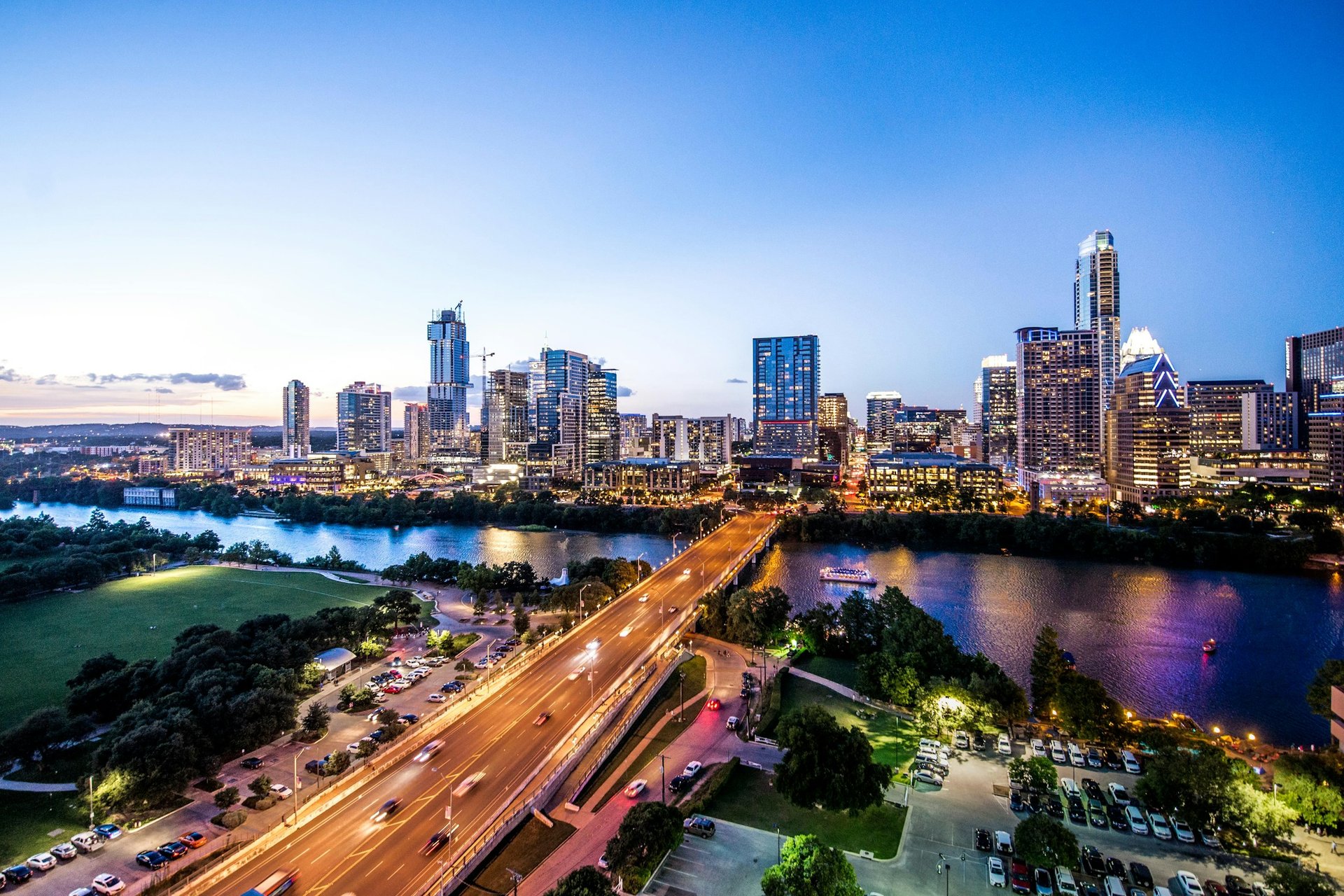
Retirement in Texas
Retirees who want zero state tax on retirement income, big-city healthcare and airports, warm winters, and a lower cost of living — and who will own a home with the over-65 exemptions in place and can tolerate hot summers and weather risk.
Fact text
- Texas spent nearly a decade as an independent nation before joining the United States in 1845.
- The Texas State Capitol in Austin stands taller than the U.S. Capitol in Washington.
- King Ranch in South Texas covers more ground than the entire state of Rhode Island.
- Bracken Cave near San Antonio shelters the largest known bat colony on Earth each summer.


- No state income tax — Social Security, pensions, and IRA/401(k) withdrawals go untaxed
- No estate or inheritance tax
- Cost of living about 9% below the U.S. average (MERIC index 90.7, Q1 2026) and typical home value near $303,000
- Substantial senior property tax relief: $200,000 total school-district homestead exemption for 65+ and a school-tax ceiling frozen at age 65
- World-class metro healthcare, including Texas Medical Center in Houston, UT Southwestern in Dallas, and MD Anderson Cancer Center
- Mild winters in most of the state; no snow shoveling for the vast majority of retirees
- Enormous variety — Gulf Coast, Hill Country, piney woods, border cities, and major metros — plus big airports with direct flights everywhere
- Property taxes among the highest in the nation (~1.4% effective) even after recent exemption increases
- Serious and varied natural-disaster exposure: hurricanes on the coast, flooding, tornadoes, hail, wildfire, and extreme heat
- Homeowners insurance premiums are among the costliest in the country and rising
- Brutally hot summers — long stretches above 100°F inland and heavy humidity on the coast
- Rural healthcare is strained: Texas leads the nation in rural hospital closures, and dozens more are at risk
- The 2021 winter storm exposed electric-grid vulnerability; summer grid strain remains a watch item
- Big-metro traffic, sprawl, and rapid growth in the most desirable retirement areas
Texas attracts more relocating retirees than almost any state, and the fundamentals are easy to state: no income tax of any kind, no estate or inheritance tax, a cost of living about 9% below the national average, warm winters, and metro healthcare that ranks with the best in the world. For a retiree selling a home in California or the Northeast, the arithmetic can be striking.
The honest counterpoints are just as concrete. Texas property taxes are among the highest in the nation, homeowners insurance is expensive and getting more so, and the state's menu of natural hazards — hurricanes, floods, tornadoes, hail, wildfire, extreme heat, and the occasional paralyzing winter storm — is unusually long. Summers are genuinely punishing, and rural healthcare has thinned badly even as metro medicine thrives.
Texas is also huge and varied: 31.7 million people, with about 14.9% aged 65 or older — a younger profile than most states — spread across coastal plains, Hill Country, piney woods, and high desert. Choosing where in Texas matters as much as choosing Texas.
The Case for Retiring in Texas
No state income tax means Social Security, pensions, military retirement, annuity income, and IRA or 401(k) withdrawals are untouched by the state, with nothing to file. There is no estate or inheritance tax.
Property taxes are high, but Texas has built unusually strong senior protections into the homestead system. As of the 2025 constitutional amendments, homeowners get a $140,000 school-district homestead exemption, and those 65 and older get an additional $60,000 — $200,000 of home value shielded from school taxes, which are the largest slice of most bills. On top of that, the school-tax ceiling freezes the school portion of a senior's bill at the amount paid the year they turn 65, and seniors may defer homestead taxes entirely (with interest) if cash flow demands it.
Costs overall are moderate: a 90.7 cost of living index (Q1 2026) and a typical home value near $303,000 (June 2026), with San Antonio, El Paso, Corpus Christi, and many mid-size cities well below that. Winters are mild almost everywhere — golf and gardening are year-round pursuits in most of the state.
Healthcare in the Texas Triangle is a global draw: Houston's Texas Medical Center is the world's largest medical complex and home to MD Anderson Cancer Center, routinely ranked the top U.S. cancer hospital; Dallas has UT Southwestern; Houston Methodist, Memorial Hermann, and Baylor Scott & White add depth. Major airports in Dallas and Houston offer direct flights nearly everywhere, which matters for seeing family.
The Trade-Offs to Consider
Property tax is the first. Even after recent relief, the statewide effective rate is roughly 1.4% of home value — among the nation's highest — and rates in some counties run higher still. The senior exemptions and school-tax freeze help substantially, but a retiree buying a $400,000 home should still model the full bill before committing.
Weather risk is the second. The Gulf Coast faces hurricanes and the flooding they bring — Harvey's 2017 deluge of Houston is the modern benchmark. North and Central Texas sit in hail and tornado country. West Texas has wildfire risk, and the whole state now plans around extreme heat, with inland summers regularly topping 100°F for weeks. February 2021's Winter Storm Uri showed that even cold is a hazard here, knocking out power statewide. These risks show up directly in homeowners insurance premiums, which are among the costliest in the country and have risen sharply.
Third, rural healthcare. Texas leads the nation in rural hospital closures, and recent reporting counts dozens of the remaining rural hospitals at financial risk. Metro retirees will never notice; a retiree on a ranchette two hours from the nearest cardiac cath lab will.
Finally, growth itself: traffic in the big metros, sprawl, and rising prices in favorites like the Hill Country are real quality-of-life considerations.
Taxes for Retirees in Texas
Texas levies no personal income tax, so Social Security, pensions, military retirement, annuity payouts, and retirement account withdrawals are all state-tax-free. There is no state estate or inheritance tax.
Sales tax is 6.25% at the state level; local jurisdictions can add up to 2%, and the population-weighted average combined rate is about 8.2%. Groceries and prescription drugs are exempt.
Property tax is the main event, at roughly a 1.4% average effective rate (varying widely by county). Relief for homeowners 65+ includes: the $140,000 general school homestead exemption plus a mandatory additional $60,000 senior exemption; the school-tax ceiling, which freezes school taxes at the amount owed the year you turn 65; optional additional exemptions from cities and counties; installment payment rights; and the option to defer homestead taxes (interest accrues, and the deferred amount comes due when the home changes hands). Exemption amounts changed as recently as the November 2025 election, so confirm current figures with your county appraisal district or a tax professional.
Cost of Living and Housing
Texas' overall cost of living runs about 9% below the U.S. average (index 90.7, Q1 2026). Zillow's typical home value of $302,999 (June 2026) conceals huge spread: Austin remains the priciest major metro, Dallas-Fort Worth and Houston sit near the middle, and San Antonio, El Paso, and most smaller cities are markedly cheaper. Budget realistically for the two Texas-specific line items — property taxes near 1.4% effective (before senior relief) and homeowners insurance that can run two to three times what retirees paid in lower-risk states — plus summer electricity bills for months of air conditioning.
Healthcare for Retirees
For metro dwellers, Texas healthcare is a genuine reason to move here. The Texas Medical Center in Houston is the largest medical complex in the world, anchored by MD Anderson Cancer Center, Houston Methodist, and Memorial Hermann. Dallas-Fort Worth has UT Southwestern and Baylor Scott & White; San Antonio and Austin have deep systems of their own. Medicare Advantage and supplement markets are competitive in the metros. The caution is geographic: Texas has recorded more rural hospital closures than any other state, and analyses in 2025–2026 flagged dozens more as vulnerable, so retirees eyeing small towns should map emergency care, drive times, and specialist access first.
Climate and Natural-Disaster Risk
Expect heat. Most of Texas sees long, hot summers — humid on the coast, drier but hotter inland — and climate trends are lengthening the 100°F season. Winters are mild in the south and center, colder in the Panhandle. Hazard exposure varies by region: hurricanes and coastal flooding along the Gulf; flash flooding in the Hill Country; tornadoes and giant hail from Dallas north; wildfire in the west. The 2021 winter storm demonstrated statewide grid vulnerability in rare deep freezes. Insurance availability and price are the practical lens: quotes for wind, hail, and flood coverage should be part of choosing a specific town, not an afterthought.
Annuities and Retirement Income in Texas
With no state income tax, annuity income in Texas faces only federal tax, and Texans using guaranteed-income products to cover essential expenses alongside Social Security keep the state out of the equation entirely. Annuities can anchor a retirement income floor, but they involve trade-offs — surrender periods, fees on some designs, and inflation exposure on fixed payouts — that warrant comparison shopping and independent advice.
Texas gives buyers more time than most states to reconsider: annuities sold in Texas must carry a 20-day free-look period, and replacement annuities 30 days, during which you can cancel for a full refund. If a licensed insurer fails, the Texas Life and Health Insurance Guaranty Association covers annuity benefits up to $250,000 in present value per life. That backstop is reassuring but limited — choosing a financially strong insurer, and splitting large sums among insurers if appropriate, remains the sounder protection.
Who Texas Suits Best
Texas fits retirees who want zero state tax on retirement income, world-class metro healthcare, direct flights, warm winters, and housing their savings can comfortably buy — especially those who will own a homestead and lock in the over-65 school-tax freeze. It rewards people who pick their spot deliberately: San Antonio and the Hill Country for value and scenery, the metro suburbs for healthcare proximity, the coast only with clear eyes about storms and insurance. It is a weaker fit for retirees intolerant of extreme heat, wary of hurricane and hail exposure, seeking small-town life far from hospitals, or renting long-term without the homestead protections that soften Texas' property-tax bite.
Does Texas tax Social Security or retirement income?
No. Texas has no state income tax, so Social Security, pensions, military retirement, annuity income, and IRA or 401(k) withdrawals are all free of state tax. Texas also has no estate or inheritance tax.
How bad are Texas property taxes for retirees?
The average effective rate is about 1.4% of home value — among the highest in the nation — but seniors get major relief: a $200,000 total school-district homestead exemption at 65 (the $140,000 general exemption plus an extra $60,000), a school-tax ceiling frozen at the amount paid the year you turn 65, and the right to defer homestead taxes with interest.
What is the free-look period for annuities in Texas?
Texas requires a 20-day free-look period for annuities, and 30 days for replacement annuities, according to the Texas Department of Insurance. During that window you can cancel the contract and receive a full refund.
How is healthcare for retirees in Texas?
Outstanding in the metros — Houston's Texas Medical Center is the world's largest medical complex and includes MD Anderson Cancer Center, and Dallas has UT Southwestern. Rural Texas is much weaker: the state leads the nation in rural hospital closures, so verify local hospital access before settling in a small town.
What natural disasters affect retirees in Texas?
It depends on region: hurricanes and flooding on the Gulf Coast, tornadoes and large hail in North and Central Texas, wildfire in the west, and extreme summer heat statewide. Rare winter storms, like February 2021's, can also cause widespread power outages. These risks make homeowners insurance among the costliest in the country.
What happens to my annuity if my insurer fails in Texas?
The Texas Life and Health Insurance Guaranty Association covers annuity benefits up to $250,000 in present value per life if a licensed insurer becomes insolvent. It is a safety net rather than a guarantee of full recovery for larger contracts, so insurer financial strength should drive your choice.
Keep Learning
Free retirement education from Annuities.net — no signup required.

Empower Your Retirement Planning: How to Evaluate Annuity Options
Learn how to evaluate annuity options, weigh the trade-offs, and build a secure retirement plan. Use independent education from Annuities.net to make informed decisions and plan for steady lifetime income.
Read more

Why Independent Annuity Guidance Makes a Difference for Your Nest Egg
Independent, unbiased annuity guidance helps protect your nest egg by offering clear, conflict-free information. Use the free educational resources at Annuities.net to make informed retirement planning decisions.
Read more

Unlock Your Retirement Potential: Why Independent Financial Advice Matters
Independent financial advice is crucial for unbiased, personalized retirement planning. Annuities.net offers free, transparent education and a match with a licensed advisor to help secure steady income and financial peace of mind.
Read more
Not sure if an annuity is right for you?
Select the annuity that fits your financial plan. No pressure, always transparent.