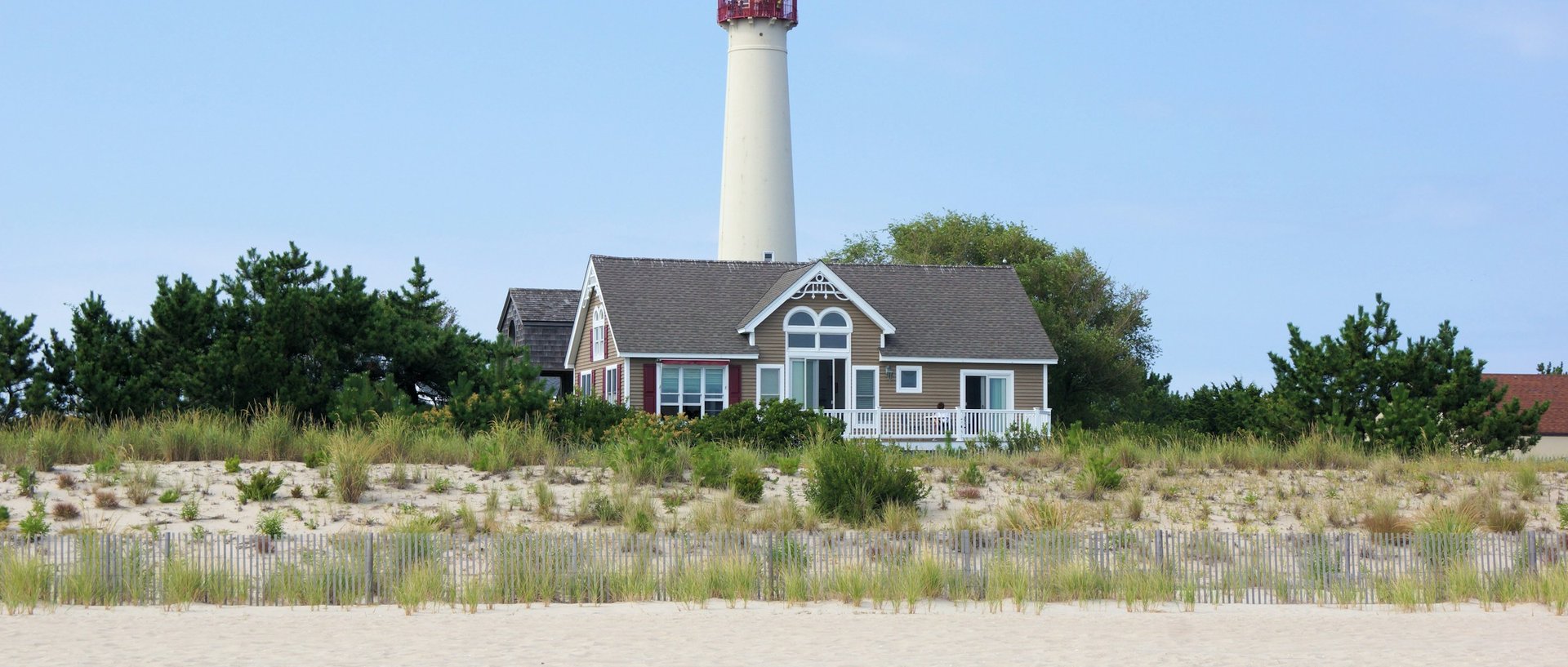

Retirement in New Jersey
Retirees with deep local roots and moderate incomes that fit under the $100,000-$150,000 exclusion thresholds — especially 65+ homeowners who can stack Stay NJ, ANCHOR, and Senior Freeze. Hard fit for high-income retirees above the exclusion cliff or estates aimed at non-immediate heirs.
Fact text
- New Jersey is the only state where drivers are not allowed to pump their own gas.
- Most of the streets on the classic Monopoly board are named after real streets in Atlantic City.
- Atlantic City built the nation's first boardwalk in 1870.
- New Jersey is often called the Diner Capital of the World, with more diners than any other state.


- Social Security benefits never taxed; military pensions fully exempt
- Retirement income exclusion up to $100,000 (joint) of pension/annuity/IRA income for 62+ households with income <=$100,000
- Stay NJ (from 2026): up to 50% of property tax covered, max $6,500, for eligible 65+ homeowners — stacking with ANCHOR (up to $1,750) and the Senior Freeze
- Among the densest hospital infrastructure in the U.S., plus NYC and Philadelphia academic centers nearby
- Extensive transit (NJ Transit rail/bus), three major airports, and 130 miles of Shore
- Groceries, prescription drugs, and clothing exempt from sales tax; moderate 6.625% rate
- Large stock of active-adult 55+ communities, concentrated in Ocean, Monmouth, and Burlington counties
- Highest effective property tax rate in the nation (~1.88%); average bills near $10,000
- Cost of living ~19% above the U.S. average (index 118.8)
- Typical home value ~$584,700 with fierce competition in commuter towns
- Inheritance tax of 11-16% on siblings, sons/daughters-in-law, and unrelated heirs (15-16%)
- Retirement income exclusion vanishes entirely above $150,000 of income — a planning cliff; top marginal rate 10.75%
- Hurricane, coastal-flood, and inland-flood exposure (Sandy 2012, Ida 2021); costly flood insurance at the Shore
- Congestion, density, and high insurance/toll/utility costs
New Jersey has a reputation as a place retirees flee, and the headline numbers explain why: the highest effective property tax rate in the nation (about 1.88%), a cost of living nearly 19% above the U.S. average, and a typical home price around $585,000. Every year, moving vans carry New Jersey retirees to Florida and the Carolinas.
But the full story is more interesting, because New Jersey's tax code is unusually kind to retirement income specifically. Social Security is completely exempt. Military pensions are exempt. And a generous pension and retirement income exclusion lets couples 62 and older with income of $100,000 or less exclude up to $100,000 of pension, annuity, and IRA income from state tax — meaning many middle-income New Jersey retirees pay little or no state income tax at all. Layer on the new Stay NJ program, which starting in 2026 can cover up to 50% of a senior homeowner's property tax bill (capped at $6,500), plus the long-running Senior Freeze and ANCHOR benefits, and the state is visibly trying to keep its retirees.
Add what money can't easily buy elsewhere — some of the country's densest hospital infrastructure, trains to New York and Philadelphia, the Shore, and, for most retirees, grandchildren within a short drive — and staying put becomes a defensible financial decision, not just a sentimental one. Here's the honest ledger.
The Case for Retiring in New Jersey
Social Security is never taxed. Regardless of income, New Jersey does not tax Social Security benefits. Military pensions are also fully exempt.
A powerful retirement income exclusion. Taxpayers 62 and older with total income of $100,000 or less can exclude up to $100,000 (married filing jointly), $75,000 (single), or $50,000 (married filing separately) of pension, annuity, and IRA income; a partial exclusion applies up to $150,000 of income. Structured well, a typical middle-class retirement can be nearly state-income-tax-free.
Serious new property tax relief for seniors. Stay NJ, launching with 2026 payments, covers 50% of property taxes up to a $6,500 maximum for eligible homeowners 65+, coordinated with the existing ANCHOR benefit (up to $1,750) and the Senior Freeze, which locks eligible seniors' property taxes against future increases.
Healthcare density few states match. Hackensack Meridian Health, RWJBarnabas Health, Atlantic Health, Virtua, and Cooper University Health Care blanket the state, with Manhattan and Philadelphia academic medical centers minutes to an hour away.
Location and transit. NJ Transit trains and buses reach New York and Philadelphia; three major airports serve the region; and 130 miles of Atlantic coastline — the Shore — anchor summer life.
Family proximity. For lifelong residents, the decisive advantage: children, grandchildren, friends, doctors, and community are already here.
The Trade-Offs to Consider
The nation's highest property taxes. An effective rate of about 1.88% applied to some of the country's priciest housing produces average bills near $10,000 — and far more in many North Jersey towns. Stay NJ and Senior Freeze blunt this for eligible seniors but don't erase it.
A high cost of nearly everything. The cost-of-living index of 118.8 reflects expensive housing, insurance, utilities, tolls, and services.
Expensive housing. The typical home value is about $584,700, and competition remains fierce in commuter towns; even downsizing within the state is costly.
An inheritance tax with reach. New Jersey repealed its estate tax in 2018 but kept its inheritance tax. Spouses, children, grandchildren, parents, and grandparents inherit tax-free — but siblings and sons/daughters-in-law face rates from 11-16% above modest exemptions, and unrelated heirs (including longtime partners who aren't married or in a civil union, and most friends or caregivers) pay 15-16% with almost no exemption. Estate planning matters here.
High marginal rates on large incomes. Income above the exclusion thresholds is taxed on a graduated scale from 1.4% up to 10.75% (top rate above $1 million) — and crossing the $150,000 income line eliminates the retirement exclusion entirely, a cliff worth planning around.
Coastal storm risk. Sandy (2012) and Ida (2021) demonstrated the state's exposure to tropical systems, coastal flooding, and inland river flooding; Shore-area flood insurance is a real cost.
Congestion. Traffic, density, and pace are the daily texture of much of the state.
Taxes for Retirees in New Jersey
New Jersey never taxes Social Security benefits, and military pensions are fully exempt.
For other retirement income, the pension/retirement income exclusion is the centerpiece: at age 62+, if your total income is $100,000 or less, you can exclude up to $100,000 (joint), $75,000 (single), or $50,000 (married filing separately) of pension, annuity, and IRA income. A partial exclusion phases between $100,000 and $150,000 of income; above $150,000, the exclusion disappears. Income beyond the exclusion is taxed at graduated rates from 1.4% to 10.75%. Because of the cliffs, the timing of large IRA withdrawals deserves professional advice.
Sales tax is 6.625% (average combined about 6.60%, since Urban Enterprise Zones charge half-rate), and — helpfully for retirees — groceries, prescription drugs, and clothing are exempt.
Property taxes are the nation's highest at about 1.88% effective. Three senior-relief programs stack: Senior Freeze reimburses eligible long-time owners for increases over their base year; ANCHOR pays homeowners and renters up to $1,750; and Stay NJ, first paid in 2026, tops eligible 65+ homeowners' combined benefits up to 50% of the property tax bill, capped at $6,500. New Jersey now uses a combined PAS-1 application for all three.
There is no estate tax (repealed for deaths after January 1, 2018), but the inheritance tax remains: Class A beneficiaries (spouse, civil union partner, children, grandchildren, parents) are fully exempt; siblings and sons/daughters-in-law pay 11-16%; other heirs pay 15-16%. Confirm details with a tax professional or the NJ Division of Taxation.
Cost of Living and Housing
There's no way around it: New Jersey is one of the most expensive states, with a cost-of-living index of 118.8 (Q1 2026) and a typical home value of $584,681 (June 2026). Costs vary sharply by region — Bergen, Essex, and Monmouth commuter towns and the premium Shore communities run far above the state figure, while South Jersey (Gloucester, Salem, Cumberland counties) and the northwest offer meaningfully lower prices and property tax bills. The state's many active-adult 55+ communities, concentrated in Ocean, Monmouth, and Burlington counties, remain the workhorse retirement option, offering newer single-level housing with somewhat lower carrying costs. Renters benefit from ANCHOR too, and downsizing to a 55+ condo is the most common in-state cost-cutting play.
Healthcare for Retirees
Healthcare is a genuine New Jersey strength. The state's hospital density is among the highest anywhere: Hackensack Meridian Health and RWJBarnabas Health (partnered with Rutgers for academic medicine) operate dozens of hospitals between them, with Atlantic Health's Morristown Medical Center a nationally ranked cardiac center, Cooper University Health Care and Virtua serving South Jersey, and specialized cancer care at Rutgers Cancer Institute and Memorial Sloan Kettering's New Jersey locations. Nearly every retiree lives within a short drive of an emergency department and within an hour of a major academic center — including Manhattan's and Philadelphia's flagship hospitals. Medicare Advantage and Medigap markets are competitive and deep. For retirees prioritizing healthcare access above all, few states compete.
Climate and Natural-Disaster Risk
New Jersey has a humid four-season climate: hot, sticky summers (90°F+ stretches), colorful falls, and winters that mix rain, snow, and nor'easters — milder at the Shore and in South Jersey, snowier in the northwest highlands. The hazards that matter are water-related: tropical storms and hurricanes (Sandy in 2012 remains the benchmark), coastal flooding that is worsening with sea-level rise, and inland river flooding — Ida's 2021 remnants caused deadly flooding well inland along the Raritan and Passaic basins. Shore and riverfront buyers should check FEMA flood maps and price flood insurance before falling in love with a listing. Tornadoes, earthquakes, and wildfire remain minor risks by national standards.
Annuities and Retirement Income in New Jersey
New Jersey's retirement income exclusion treats annuity income like pension and IRA income — excludable up to the limits for 62+ households with income of $150,000 or less — so many residents receive annuity payouts partly or wholly free of state income tax. With fixed costs as high as they are here (property taxes above all), some retirees use guaranteed annuity income to ensure the non-negotiable bills are covered for life regardless of markets.
New Jersey's guaranty protection is stronger than most states': if a licensed insurer fails, the New Jersey Life & Health Insurance Guaranty Association covers up to $500,000 in present value of annuity benefits for annuities in payout status, and up to $250,000 in cash surrender value for deferred annuities still accumulating. As everywhere, the guaranty association is a backstop — buy from financially strong insurers first.
Who New Jersey Suits Best
New Jersey suits retirees with deep local roots — family, doctors, community — and moderate retirement incomes that fit under the $100,000-$150,000 exclusion thresholds, especially homeowners 65+ who can stack Stay NJ, ANCHOR, and the Senior Freeze. It is a hard sell for retirees without local ties, those with large annual IRA drawdowns that blow past the exclusion cliff, house-rich households in high-tax towns who won't qualify for relief, and anyone whose estate plan leans on non-immediate heirs.
Does New Jersey tax Social Security benefits?
No. New Jersey does not tax Social Security benefits at any income level, and military pensions are also fully exempt from state income tax.
How does New Jersey's retirement income exclusion work?
At age 62+, households with total income of $100,000 or less can exclude up to $100,000 (joint), $75,000 (single), or $50,000 (married filing separately) of pension, annuity, and IRA income from state tax. A partial exclusion applies between $100,000 and $150,000 of income, and above $150,000 the exclusion disappears entirely — a cliff worth planning around with a tax professional.
What property tax relief can New Jersey seniors get?
Three programs stack via one PAS-1 application: Stay NJ (first paid in 2026) brings eligible 65+ homeowners' total relief up to 50% of their property tax bill, capped at $6,500; ANCHOR pays up to $1,750 to homeowners and renters; and the Senior Freeze reimburses eligible long-time owners for property tax increases above their base year.
Does New Jersey have an estate or inheritance tax?
The estate tax was repealed for deaths on or after January 1, 2018, but the inheritance tax remains. Spouses, civil union partners, children, grandchildren, parents, and grandparents inherit tax-free; siblings and sons/daughters-in-law pay 11-16%; unrelated heirs pay 15-16%. Estate planning is important for anyone leaving assets outside the exempt classes.
What happens to my annuity if my insurer fails in New Jersey?
The New Jersey Life & Health Insurance Guaranty Association provides stronger protection than most states: up to $500,000 in present value of annuity benefits for annuities in payout status, and up to $250,000 in cash surrender value for deferred annuities. Choosing a financially strong insurer is still the first line of defense.
Is it worth retiring in New Jersey despite the costs?
For many, yes — if income fits under the retirement exclusion thresholds and senior property tax relief applies, the effective tax burden on a middle-income retiree can be modest. What tips the scale is usually family proximity, transit, and healthcare density; retirees without those ties often find better pure value elsewhere.
Keep Learning
Free retirement education from Annuities.net — no signup required.

Empower Your Retirement Planning: How to Evaluate Annuity Options
Learn how to evaluate annuity options, weigh the trade-offs, and build a secure retirement plan. Use independent education from Annuities.net to make informed decisions and plan for steady lifetime income.
Read more

Why Independent Annuity Guidance Makes a Difference for Your Nest Egg
Independent, unbiased annuity guidance helps protect your nest egg by offering clear, conflict-free information. Use the free educational resources at Annuities.net to make informed retirement planning decisions.
Read more

Unlock Your Retirement Potential: Why Independent Financial Advice Matters
Independent financial advice is crucial for unbiased, personalized retirement planning. Annuities.net offers free, transparent education and a match with a licensed advisor to help secure steady income and financial peace of mind.
Read more
Not sure if an annuity is right for you?
Select the annuity that fits your financial plan. No pressure, always transparent.