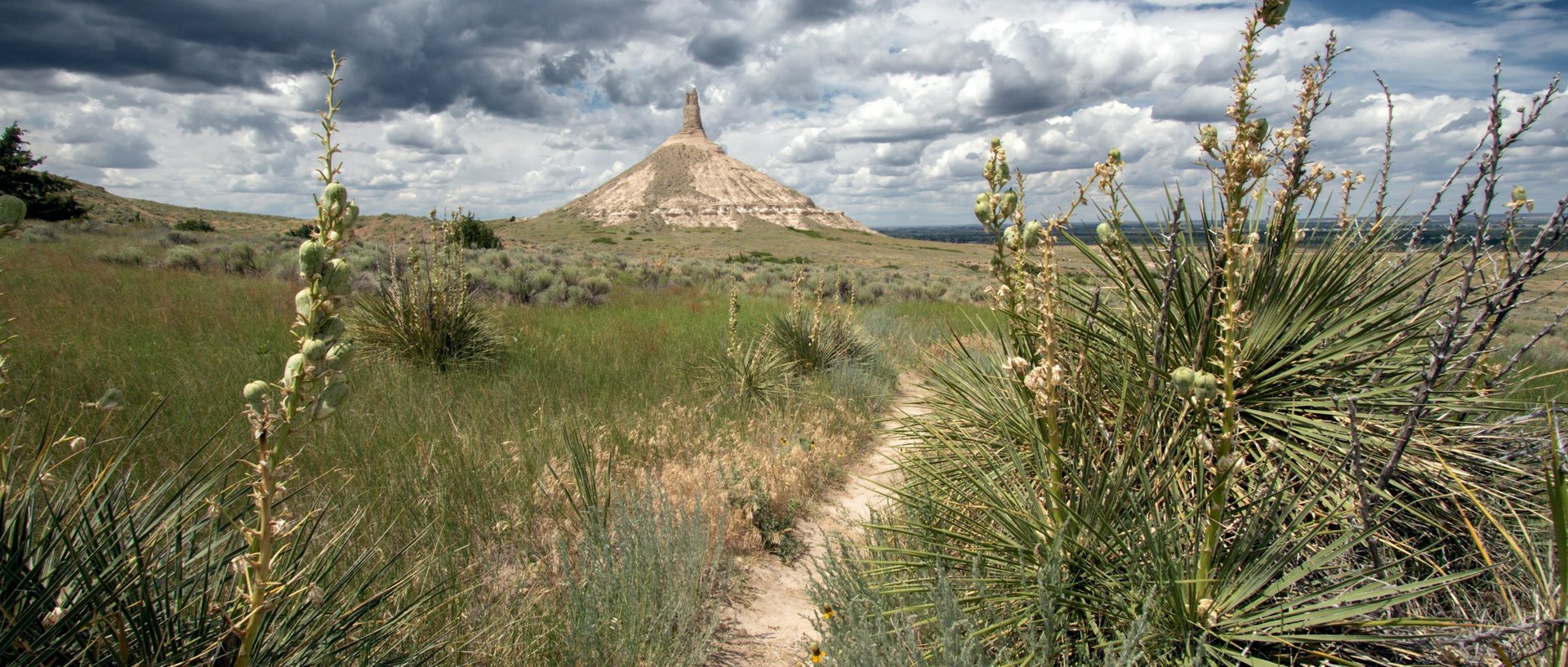

Retirement in Nebraska
Value-focused retirees — especially veterans and households that lean on Social Security — who want low costs, big-city medicine in Omaha or Lincoln, and steady communities. Less suited to those averse to severe weather, high property taxes, or the inheritance tax's reach on non-immediate heirs.
Fact text
- Nebraska is the only state with a one-house, nonpartisan legislature.
- Kool-Aid was invented in Hastings, Nebraska, and is the official state soft drink.
- Arbor Day was founded in Nebraska City in 1872.
- Carhenge, near Alliance, is a full-scale replica of Stonehenge built entirely from vintage automobiles.


- Cost of living about 9% below the U.S. average (index 91.3)
- Typical home value around $279,000 — far below the national average
- Social Security benefits fully exempt from state income tax
- Military retirement pay 100% exempt
- Income tax rates falling every year: top rate 4.55% in 2026, 3.99% by 2027
- Nationally recognized academic medicine in Omaha (Nebraska Medicine/UNMC) plus strong Lincoln systems
- Groceries exempt from sales tax; moderate 6.98% average combined sales tax
- High property taxes: ~1.44% effective rate on owner-occupied homes
- One of the last states with an inheritance tax — up to 15% for non-relative heirs
- IRA, 401(k), and private pension income is taxable
- Tornado and hail corridor: severe spring storms raise insurance costs
- Cold, icy winters and hot summers
- Flat, landlocked geography with no mountains or coastline
- Sparse healthcare and services across central and western Nebraska
Nebraska rarely tops glossy "best places to retire" lists, and that is part of its appeal. The state offers something increasingly rare: genuinely affordable living. Overall costs run about 9% below the national average, and the typical home costs around $279,000 — roughly $85,000 less than the typical American home. For retirees whose savings need to stretch, that gap compounds year after year.
The tax story has also improved dramatically. Nebraska finished phasing out its tax on Social Security benefits, fully exempts military retirement pay, and is cutting its income tax rates every year — the top rate is 4.55% for 2026 and is scheduled to reach 3.99% in 2027. A decade ago Nebraska was routinely labeled tax-unfriendly for retirees; that label is out of date.
But two financial thorns remain, and they are sharp ones. Nebraska's property taxes are among the higher in the nation at an effective rate of about 1.44%, and it is one of the last states in America with a county-level inheritance tax that can reach heirs beyond immediate family. Add Plains weather — tornadoes, hail, hot summers, cold winters — and Nebraska is a value play with real trade-offs worth understanding.
The Case for Retiring in Nebraska
Low cost of living. Nebraska's cost index sits at 91.3 (U.S. average = 100), among the most affordable states. Housing is the biggest lever: the typical home value is about $279,000, and pleasant neighborhoods in Lincoln, Omaha suburbs, Kearney, or Grand Island cost far less than comparable areas on either coast.
Social Security is not taxed. Nebraska completed its phase-out, and benefits are now fully exempt from state income tax — a meaningful change for the majority of retirees whose largest income source is Social Security.
Military retirement is fully exempt. Veterans keep 100% of their military retirement pay free of state tax, one reason the Offutt Air Force Base area retains so many retirees.
Income tax rates are falling. The top rate is 4.55% in 2026, headed to 3.99% by 2027, and the bottom bracket is just 2.46%.
Strong healthcare in the metros. Omaha is a legitimate medical center: Nebraska Medicine (the University of Nebraska Medical Center's clinical partner) is nationally known, and CHI Health and Methodist Health System add depth. Lincoln's Bryan Health anchors the capital region.
Groceries are exempt from sales tax, and the combined state-and-local sales tax averages a moderate 6.98%.
Stability. Nebraska's diversified agriculture, insurance, and logistics economy runs steady, and its cities consistently score well on safety and short commutes.
The Trade-Offs to Consider
High property taxes. The effective rate on owner-occupied homes is about 1.44% — nearly triple states like Nevada or Colorado. On a $279,000 home that is roughly $4,000 a year, and the burden is a perennial political issue. The homestead exemption helps qualifying seniors 65+, but it is income-tested.
The inheritance tax. Nebraska is one of the few remaining states with an inheritance tax, collected at the county level. Spouses pay nothing, and immediate relatives (children, grandchildren, parents, siblings) pay 1% only above a $100,000 exemption — but nieces and nephews pay 11% above $40,000, and unrelated heirs pay 15% above $25,000. If you plan to leave assets to non-family caregivers, friends, or distant relatives, this needs planning attention.
Retirement account withdrawals are taxed. IRA, 401(k), and private pension income is taxable as ordinary income (at the falling rates noted above).
Severe weather. Eastern Nebraska sits in the active tornado and hail corridor; damaging hailstorms are frequent enough to show up in homeowners insurance premiums. Winters bring ice and blizzards; summers bring stretches above 95°F.
Flat, landlocked geography. No mountains, no ocean. If scenery is central to your retirement vision, Nebraska's subtler prairie landscape may not satisfy.
Rural healthcare gaps. Outside Omaha, Lincoln, and the larger regional hubs, care thins out quickly across the state's vast western reaches.
Taxes for Retirees in Nebraska
Nebraska no longer taxes Social Security benefits — the exemption is complete and applies regardless of income. Military retirement pay is also fully exempt.
Other retirement income — IRA and 401(k) withdrawals and private or out-of-state government pensions — is taxable as ordinary income. For 2026, rates run from 2.46% to a top rate of 4.55%, with the top rate scheduled to fall to 3.99% by 2027. Because Nebraska's brackets are compressed, most middle-income retirees pay near the top rate on taxable income, which makes the ongoing rate cuts genuinely valuable.
The state sales tax is 5.5%, with a combined state-and-local average of about 6.98%. Groceries are exempt.
Property taxes are the sore spot: an effective rate around 1.44% of home value, well above the national average. Homeowners 65 and older may qualify for Nebraska's homestead exemption, which can exempt some or all of a home's value from tax on a sliding scale tied to income; disabled homeowners and certain veterans also qualify. Applications go through your county assessor each year.
Nebraska has no estate tax, but its county-level inheritance tax applies at 1% over $100,000 for immediate relatives, 11% over $40,000 for aunts/uncles/nieces/nephews, and 15% over $25,000 for other heirs; surviving spouses are fully exempt. Confirm current rules with a tax professional or the Nebraska Department of Revenue — inheritance tax reform is a recurring legislative topic.
Cost of Living and Housing
Nebraska is one of the more affordable states in the country, with an overall cost-of-living index of 91.3 in early 2026. The typical home value of $279,080 (April 2026, up 3.4% year over year) means a downsizing retiree arriving from a coastal market can often buy outright and bank substantial equity. Omaha's desirable western suburbs and Lincoln's south side run above the state figure; Kearney, Norfolk, Hastings, Grand Island, and Scottsbluff run below it. Day-to-day costs — groceries, services, utilities — track below national norms, though property taxes and hail-influenced home insurance premiums claw back some of the housing savings.
Healthcare for Retirees
For a state of two million people, Nebraska's metro healthcare is exceptional. Omaha's Nebraska Medicine/UNMC campus is a nationally recognized academic medical center with organ transplant, cancer (the Fred & Pamela Buffett Cancer Center), and infectious disease programs; CHI Health and Methodist Health System operate extensive hospital and clinic networks across the metro. Lincoln is anchored by Bryan Health and CHI St. Elizabeth.
The picture changes west of the metros. Much of central and western Nebraska depends on critical-access hospitals and visiting specialists, with Kearney, North Platte, and Scottsbluff serving as regional hubs. Retirees settling in small towns should map the drive time to cardiology, oncology, and orthopedics before committing.
Climate and Natural-Disaster Risk
Nebraska has a true continental climate: cold winters with ice storms and occasional blizzards, hot summers, and volatile springs. The state sits in the heart of Hail Alley and sees regular tornado activity, concentrated from spring through early summer — severe thunderstorms, tornadoes, and hail are the hazards most likely to touch a retiree's finances, chiefly through insurance premiums and roof repairs. River flooding is a periodic risk (the 2019 Missouri River floods were a stark reminder), and drought cycles affect the western half. A storm shelter or basement, standard in most Nebraska homes, is worth confirming when you house-hunt.
Annuities and Retirement Income in Nebraska
Nebraska's low living costs mean guaranteed income goes further here: a monthly annuity payment that feels tight on the coasts can comfortably cover housing, utilities, and groceries in Lincoln or Kearney. Some retirees use annuities to lock a floor under essential expenses — including that annual property tax bill — while keeping other savings invested. Note that annuity income, like other non-Social Security retirement income, is subject to Nebraska income tax.
If a licensed insurer fails, the Nebraska Life & Health Insurance Guaranty Association covers up to $250,000 in present value of annuity benefits per owner, per insolvent company — the total across multiple annuity contracts with the same company is capped at that $250,000. The guaranty fund is a backstop, not a substitute for buying from financially strong insurers, so check ratings first.
Who Nebraska Suits Best
Nebraska suits value-focused retirees — especially veterans and Social Security-reliant households — who want low costs, exempt benefits, falling income tax rates, and big-city medicine in Omaha or Lincoln without big-city prices. It is a weaker fit for those who dread severe-weather seasons, want mountains or coastline, plan to leave large bequests to non-immediate heirs (the inheritance tax), or hope to escape high property tax bills.
Does Nebraska tax Social Security benefits?
No. Nebraska completed a multi-year phase-out, and Social Security benefits are now fully exempt from state income tax regardless of income level. Military retirement pay is also 100% exempt.
How high are Nebraska property taxes for retirees?
Nebraska's effective property tax rate is about 1.44% of home value — among the higher rates nationally, roughly $4,000 a year on a typical $279,000 home. Homeowners 65 and older may qualify for the state's income-tested homestead exemption, which can remove some or all of a home's value from taxation.
What is Nebraska's inheritance tax and who pays it?
Nebraska levies a county-level inheritance tax on heirs. Surviving spouses pay nothing; children, grandchildren, parents, and siblings pay 1% only on amounts above $100,000; nieces and nephews pay 11% above $40,000; and unrelated heirs pay 15% above $25,000. There is no separate estate tax.
Are IRA and 401(k) withdrawals taxed in Nebraska?
Yes. IRA, 401(k), and private pension income is taxed as ordinary income. The good news is that rates are falling — the top rate is 4.55% for 2026 and is scheduled to reach 3.99% in 2027.
What happens to my annuity if my insurer fails in Nebraska?
The Nebraska Life & Health Insurance Guaranty Association protects resident annuity owners up to $250,000 in present value of annuity benefits per owner, per insolvent company — the cap applies across all annuity contracts with that company combined. Choosing a financially strong insurer remains the first line of defense.
Is Nebraska affordable for retirees?
Yes — it is one of the most affordable states, with overall costs about 9% below the national average and a typical home value near $279,000. High property taxes and storm-related insurance costs are the main offsets to budget for.
Keep Learning
Free retirement education from Annuities.net — no signup required.

Empower Your Retirement Planning: How to Evaluate Annuity Options
Learn how to evaluate annuity options, weigh the trade-offs, and build a secure retirement plan. Use independent education from Annuities.net to make informed decisions and plan for steady lifetime income.
Read more

Why Independent Annuity Guidance Makes a Difference for Your Nest Egg
Independent, unbiased annuity guidance helps protect your nest egg by offering clear, conflict-free information. Use the free educational resources at Annuities.net to make informed retirement planning decisions.
Read more

Unlock Your Retirement Potential: Why Independent Financial Advice Matters
Independent financial advice is crucial for unbiased, personalized retirement planning. Annuities.net offers free, transparent education and a match with a licensed advisor to help secure steady income and financial peace of mind.
Read more
Not sure if an annuity is right for you?
Select the annuity that fits your financial plan. No pressure, always transparent.