
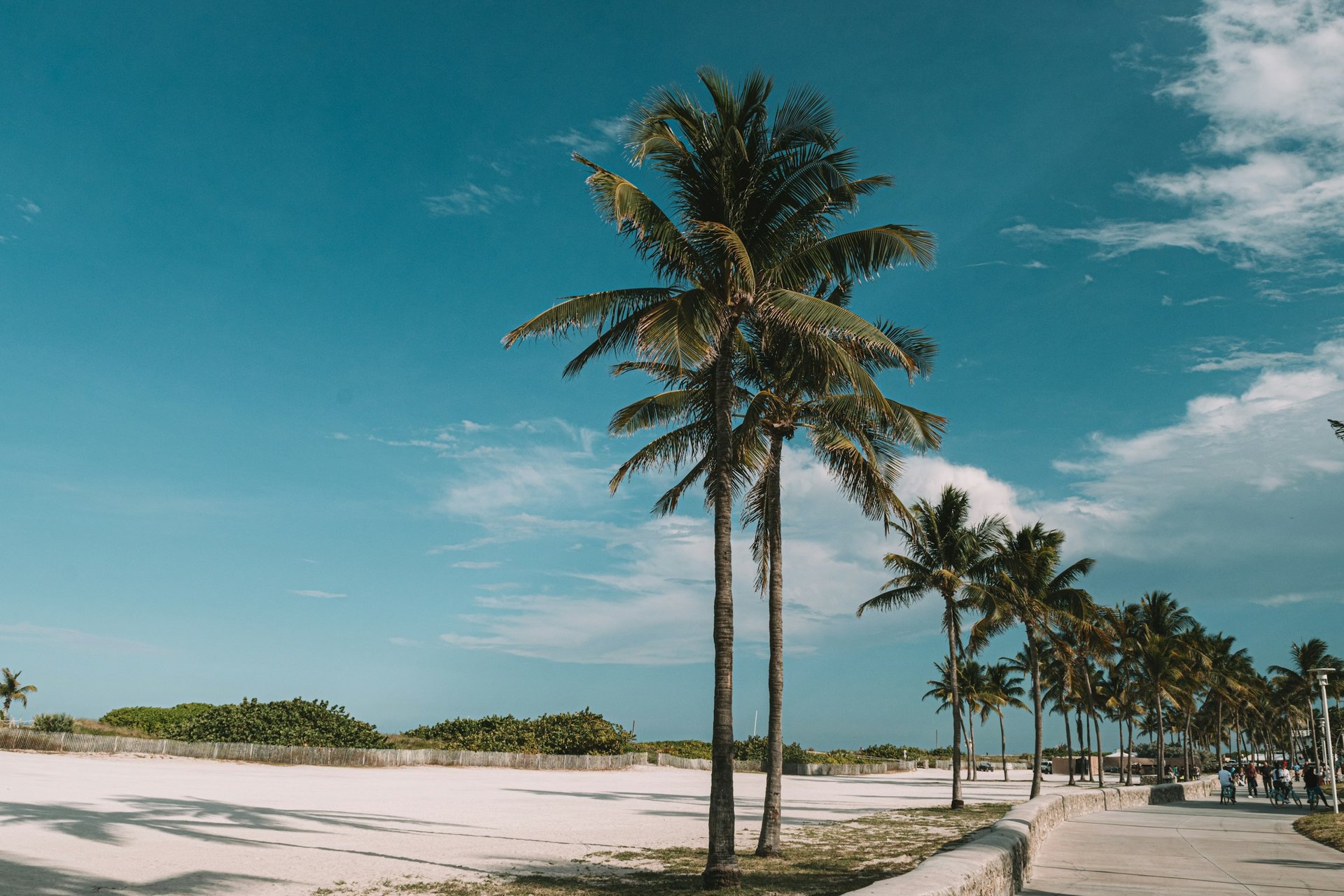
Retirement in Florida
Retirees who want zero state tax on retirement income, warm winters, and deep senior infrastructure, and who will actively manage hurricane and insurance exposure — ideally via newer, code-built, or inland housing. Less suited to tight fixed budgets tied to older coastal properties.
Fact text
- St. Augustine, founded in 1565, is the oldest continuously occupied European-established city in the continental U.S.
- Florida's constitution actually prohibits a personal state income tax — changing that would require amending it
- The Everglades is the only place on Earth where alligators and crocodiles live side by side
- Florida's highest point, Britton Hill, rises just 345 feet — the lowest state high point in the nation


- No state income tax on Social Security, pensions, IRAs, 401(k)s, or annuity income
- No estate or inheritance tax
- Homestead exemption plus Save Our Homes 3% assessment cap (with portability) protects long-term homeowners
- Warm winters and the nation's deepest retirement infrastructure (55+ communities, senior services, Medicare-oriented providers)
- Nationally recognized hospitals: Mayo Clinic Jacksonville, Cleveland Clinic Weston, Tampa General, Moffitt Cancer Center, UF Health
- 21-day unconditional free-look period on annuity purchases, among the longest in the U.S.
- Cost of living near the national average with genuinely affordable inland regions
- Highest hurricane exposure in the nation, with recent major landfalls (Ian 2022, Idalia 2023, Helene and Milton 2024)
- Homeowners insurance premiums among the highest in the U.S., volatile and hard to place in high-risk zones; flood coverage sold separately
- Long, hot, humid summers coinciding with hurricane season
- Rising condo association fees and special assessments under post-Surfside structural-safety laws
- Property taxes reset to market value at purchase, so new buyers pay far more than long-tenured neighbors
- Traffic, crowding, and strained infrastructure in coastal metros, worst in winter season
- Uneven quality between flagship systems and some community hospitals; specialist waits in fast-growing areas
Florida is the default answer to American retirement, and the fundamentals behind that reputation are real: no state income tax of any kind — Social Security, pensions, IRA withdrawals, and annuity income all escape state taxation — no estate or inheritance tax, warm winters, and an enormous retirement infrastructure built over decades. More than 23 million people live in Florida and about one in five is 65 or older, so nearly every corner of the state has senior-oriented healthcare, housing, and services.
But the Florida of 2026 is not the cheap Florida of a generation ago. The state's cost of living now sits at roughly the national average, the typical home costs about $375,000, and — most importantly — homeowners insurance has become the defining financial risk of Florida retirement. Years of hurricane losses and insurer withdrawals have left many coastal retirees paying several times the national average for coverage, and premiums can rise faster than any fixed income. Hurricanes themselves are not an abstraction: Ian (2022), Idalia (2023), and Helene and Milton (2024) each caused major damage.
Florida can still be an excellent retirement value, especially inland and for renters or buyers of newer, code-compliant homes. But the decision now requires underwriting the risks, not just enjoying the tax breaks. Here is the complete picture.
The Case for Retiring in Florida
- Zero state income tax. No tax on Social Security, pensions, 401(k)/IRA withdrawals, annuity payments, investment income, or wages. What you keep is decided federally, not in Tallahassee.
- No estate or inheritance tax, simplifying wealth transfer.
- Strong homestead protections. The homestead exemption (historically $50,000, now partly inflation-indexed) plus the Save Our Homes cap, which limits annual assessment increases on a primary residence to 3%, shields long-term residents from runaway property tax bills. Florida's homestead also carries powerful creditor protection.
- Warm winters and an outdoor lifestyle — the original draw, still valid.
- Deep retirement infrastructure: 55+ communities at every price point, senior services, and a healthcare market built around Medicare patients.
- Nationally recognized healthcare including Mayo Clinic in Jacksonville, Cleveland Clinic in Weston, Tampa General, AdventHealth Orlando, UF Health, and Moffitt Cancer Center.
- No waiting for residency benefits — establishing Florida domicile is straightforward and the tax benefits begin immediately.
The Trade-Offs to Consider
- Homeowners insurance is the big one. Florida's premiums are among the highest in the nation, coverage can be hard to place in high-risk zones, and annual increases are unpredictable — a genuine threat to fixed-income budgets.
- Hurricane and flood exposure. Both coasts are vulnerable; storm surge and inland flooding extend the risk well beyond beachfront zip codes, and standard policies exclude flood damage.
- Summer is long, hot, and humid, roughly June through September, with the hurricane season overlapping it.
- Costs have converged with the national average. The cost-of-living index is about 100.7 and condo owners face rising association fees and special assessments driven by post-Surfside structural-safety laws.
- Crowding and traffic in the major metros and along the coasts, worsening in season.
- Uneven public services. Rapid growth strains roads and infrastructure, and Medicaid-funded long-term-care capacity is tight in some regions.
Taxes for Retirees in Florida
Florida's pitch is simplicity itself:
- Income tax: None. The state constitution prohibits a personal income tax. Social Security, pensions, IRA and 401(k) distributions, and annuity income are all untaxed by the state.
- Estate and inheritance tax: None.
- Sales tax: 6% state rate; with local surtaxes the average combined rate is about 7%. Groceries and prescription drugs are exempt.
- Property tax: The average effective rate is about 0.74%, near the national middle. What makes Florida distinctive is the homestead package for primary residences: an exemption that reduces taxable value (historically $50,000, with a portion now indexed to inflation under Amendment 5), the Save Our Homes 3% annual cap on assessment growth, and portability of accumulated Save Our Homes savings to a new Florida homestead. Many counties and cities offer an additional exemption for low-income seniors 65+.
- The catch: Non-homestead and newly purchased properties reset to market value, so recent buyers often pay far more than long-tenured neighbors in identical houses. Budget from the purchase price, not the seller's old tax bill.
Florida legislators have also debated further property tax reductions for homesteaded residents; nothing should be assumed until enacted. Confirm current rules with your county property appraiser or a tax professional.
Cost of Living and Housing
Florida's overall cost of living index was about 100.7 in early 2026 — essentially the national average, cheaper than Colorado or Connecticut but no longer a discount state. The typical home value of roughly $375,000 conceals huge variation: The Villages, Ocala, and much of North Florida and the Panhandle remain genuinely affordable, while Naples, Sarasota, Miami, and the beach corridors are premium markets. Home prices in several metros actually softened during 2024-2026 as insurance costs and condo assessments cooled demand — good news for buyers, less so for owners counting on appreciation.
The line item that deserves the most scrutiny is insurance-plus-taxes-plus-HOA, not the mortgage. Condo buyers in particular should review a building's reserve funding and milestone inspection status, since post-2021 safety laws have produced five- and six-figure special assessments in older coastal buildings.
Healthcare for Retirees
Florida's healthcare market is built around retirees, with more Medicare beneficiaries than almost any other state and a correspondingly deep bench of providers. Standouts include Mayo Clinic's Jacksonville campus, Cleveland Clinic Florida in Weston, Tampa General Hospital, AdventHealth Orlando, UF Health Shands in Gainesville, Baptist Health South Florida, and Moffitt Cancer Center in Tampa, an NCI-designated comprehensive cancer center. Medicare Advantage penetration is high, and most metros offer abundant plan choices.
The caveats: quality varies widely between the flagship systems and some community hospitals; physician shortages and long waits for certain specialties affect fast-growing areas; and rural North Florida and the interior have thinner coverage. Snowbird-heavy regions also see seasonal congestion in medical offices during winter months.
Climate and Natural-Disaster Risk
Florida winters are the product: dry-season months of sunshine with highs in the 60s-70s (north) to 70s-80s (south). Summers are hot, humid, and stormy, and the Atlantic hurricane season runs June through November.
Hurricane risk is the highest in the nation, and it now expresses itself financially as much as physically. Recent seasons — Ian in 2022 (one of the costliest U.S. hurricanes on record), Idalia in 2023, Helene and Milton in 2024 — hit both coasts. Storm surge, inland freshwater flooding, and tornadoes embedded in hurricane bands extend damage far from landfall points. Flood damage requires separate flood insurance; surge-zone and older homes carry the highest premiums, while newer construction built to modern codes and inland elevated locations fare much better on both safety and cost. Before buying, obtain actual insurance quotes (wind and flood), check the FEMA flood zone and elevation, and treat those numbers as part of the price of the house.
Annuities and Retirement Income in Florida
Florida's zero income tax means annuity income, like all retirement income, faces no state-level taxation — retirees keep the full federal-after-tax amount. Florida law is also notably consumer-friendly on the purchase itself: state statute gives buyers of fixed and variable annuities an unconditional free-look period of 21 days, during which the contract can be returned for a full refund of premiums paid — one of the longer free-look windows in the country.
If an issuing insurer fails, the Florida Life and Health Insurance Guaranty Association covers resident contract owners up to $250,000 in cash surrender value for a deferred annuity, and up to $300,000 for an annuity already in benefit (paying income), per contract owner per insolvent insurer. The limits apply across all contracts with the same failed company, so some retirees split larger sums among insurers. Guaranty funds are a backstop, not a marketing feature — Florida-licensed insurers may not advertise the coverage — and choosing financially strong carriers remains the first line of defense. Verify details with FLAHIGA or the Florida Department of Financial Services.
Annuities involve surrender charges, fees, and liquidity trade-offs; nothing here is a recommendation of any product.
Who Florida Suits Best
Florida remains a strong choice for retirees who prioritize keeping state taxes at zero, want warm winters and abundant senior infrastructure, and are willing to manage — or locate away from — hurricane and insurance exposure. Inland buyers of newer homes get most of the upside with less of the risk. It is a weaker fit for those on tight fixed incomes buying older coastal properties, retirees intolerant of long humid summers, and anyone unwilling to treat insurance costs as a permanent, rising line item in the retirement budget.
Does Florida tax Social Security, pensions, or IRA withdrawals?
No. Florida has no personal income tax, so Social Security benefits, pensions, 401(k) and IRA distributions, and annuity income all escape state taxation entirely. Only federal income tax applies. Florida also has no estate or inheritance tax.
How bad is homeowners insurance in Florida really?
It is the single biggest financial risk of Florida retirement. Premiums are among the highest in the nation, can rise sharply year to year, and coverage can be difficult to place in high-risk coastal zones; flood damage requires a separate policy. Get actual wind and flood quotes for a specific property before you buy, and treat them as part of the purchase price.
What is Florida's Save Our Homes cap?
For a homesteaded primary residence, Save Our Homes limits the annual increase in assessed value to 3% regardless of market appreciation, and accumulated savings can be ported to a new Florida homestead. Combined with the homestead exemption, it strongly protects long-term residents — but assessments reset to market value when a home is sold, so new buyers should budget from the purchase price.
Is Florida still affordable for retirees?
It is average rather than cheap: the cost of living index was about 100.7 in early 2026 and the typical home about $375,000. Inland areas such as Ocala, The Villages corridor, and much of North Florida remain affordable, while Naples, Sarasota, and Miami are premium markets. Insurance and condo assessments, not groceries, are what break budgets.
What happens to my annuity if the insurance company fails in Florida?
The Florida Life and Health Insurance Guaranty Association covers resident contract owners up to $250,000 in cash surrender value for deferred annuities, or up to $300,000 for annuities already paying income, per owner per failed insurer. Limits apply across all contracts with that insurer, so some retirees split large sums among carriers. Insurer financial strength should still come first.
Does Florida have a free-look period for annuities?
Yes — one of the longest in the country. Florida Statute 626.99 gives buyers an unconditional 21-day period to return a fixed or variable annuity contract for a full refund of premiums paid, including contract fees and charges.
Keep Learning
Free retirement education from Annuities.net — no signup required.

Empower Your Retirement Planning: How to Evaluate Annuity Options
Learn how to evaluate annuity options, weigh the trade-offs, and build a secure retirement plan. Use independent education from Annuities.net to make informed decisions and plan for steady lifetime income.
Read more

Why Independent Annuity Guidance Makes a Difference for Your Nest Egg
Independent, unbiased annuity guidance helps protect your nest egg by offering clear, conflict-free information. Use the free educational resources at Annuities.net to make informed retirement planning decisions.
Read more

Unlock Your Retirement Potential: Why Independent Financial Advice Matters
Independent financial advice is crucial for unbiased, personalized retirement planning. Annuities.net offers free, transparent education and a match with a licensed advisor to help secure steady income and financial peace of mind.
Read more
Not sure if an annuity is right for you?
Select the annuity that fits your financial plan. No pressure, always transparent.