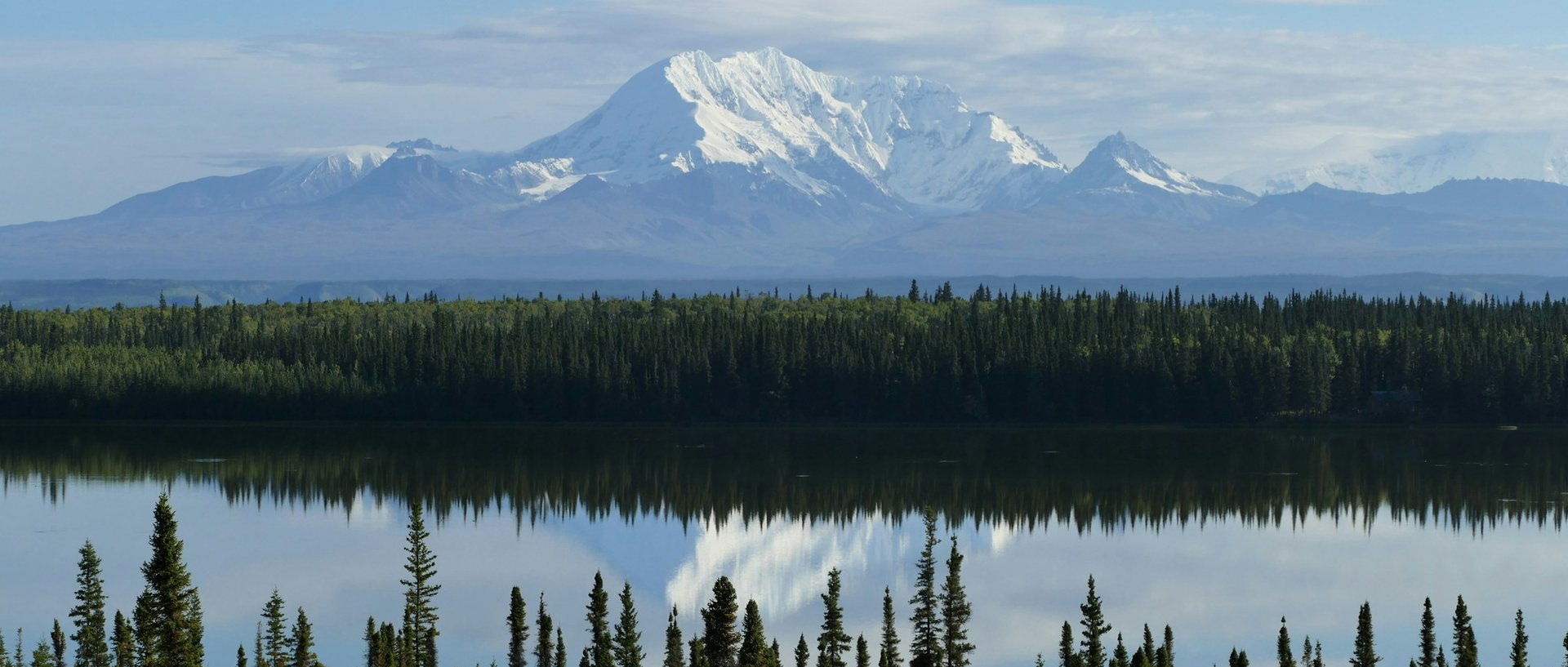

Retirement in Alaska
Healthy, independent, outdoors-oriented retirees - often with existing Alaska roots - who have substantial taxable retirement income that benefits from the zero-tax environment and can absorb high living and healthcare costs; many opt to split the year seasonally.
Fact text
- Alaska is technically both the westernmost and easternmost U.S. state, because the Aleutian Islands cross the 180th meridian
- The state pays residents an annual dividend from its oil-wealth Permanent Fund simply for living there
- Juneau is the only U.S. state capital you cannot drive to — arrivals come by boat or plane
- The United States bought Alaska from Russia in 1867 for roughly two cents an acre


- No state income tax - Social Security, pensions, 401(k)/IRA withdrawals, and annuity income are all state-tax-free
- No statewide sales tax; average combined local rate about 1.82%, lowest in the nation
- Annual Permanent Fund Dividend pays qualifying residents (amount varies by year)
- Seniors 65+ exempt from municipal property tax on the first $150,000 of assessed home value
- No estate or inheritance tax
- Unmatched wilderness, fishing, and outdoor recreation with near-endless summer daylight
- Cost of living index about 129 (MERIC Q1 2026) - among the highest of any state, especially food, energy, and healthcare
- Healthcare is among the most expensive in the U.S., with thin specialist coverage; complex care often requires travel to Anchorage or Seattle
- Long, dark, cold winters (roughly 5.5 hours of daylight in Anchorage at the solstice) raise isolation and fall risks
- Most seismically active state (1964 M9.2 quake; 2018 Anchorage quake), plus wildfire, flood, avalanche, and volcanic-ash hazards
- Great distance and expensive flights separate retirees from Lower-48 family
- Limited assisted-living, memory-care, and in-home service capacity outside Anchorage
Alaska is the most tax-friendly state in America for retirees on paper: no state income tax, no state sales tax, no estate or inheritance tax, and an annual Permanent Fund Dividend that actually pays residents to live there. Add a generous property tax exemption for homeowners 65 and older, and the tax math is hard to beat anywhere in the country.
But Alaska is also one of the most demanding places in the country to grow old. The cost of everything except taxes is high — groceries, utilities, fuel, and especially healthcare, which is among the most expensive in the nation. Winters are long, cold, and dark. Specialty medical care frequently requires a flight to Anchorage or even Seattle. And the distances — from family, from services, from a major airport — are unlike anything in the Lower 48. It is telling that many Alaskans who spend their working lives in the state choose to retire elsewhere, or split the year.
This guide lays out both sides honestly: the remarkable tax advantages and natural beauty, and the practical realities of cost, climate, and care.
The Case for Retiring in Alaska
The best tax deal in the country. Alaska has no state income tax of any kind — Social Security, pensions, 401(k) and IRA withdrawals, annuity income, and investment gains are all untouched at the state level. There is no statewide sales tax either; only some municipalities levy local sales taxes, and the average combined rate is about 1.82%, the lowest in the nation among states with any sales tax at all.
The Permanent Fund Dividend (PFD). Alaska pays qualifying residents an annual dividend from its oil-wealth fund. The amount varies year to year with fund performance and legislation, but it is real money that offsets living costs — a benefit no other state offers.
A meaningful senior property tax break. Homeowners 65 and older (and surviving spouses 60+) are exempt from municipal property taxes on the first $150,000 of assessed home value — one of the most generous senior exemptions in the country. That matters because Alaska's underlying effective property tax rate, about 1.07%, is otherwise above average.
No estate or inheritance tax. Estate planning is simpler, and wealth passes without a state-level bite.
Unmatched natural beauty and outdoor life. For retirees whose vision of retirement is fishing, hiking, wildlife, and true wilderness, nowhere else in America compares. Summers offer nearly endless daylight and mild temperatures.
A strong community fabric. Alaskan towns tend to be tight-knit and self-reliant, and Anchorage offers genuine city amenities, including the state's largest medical facilities.
The Trade-Offs to Consider
A high cost of living. Alaska's cost of living index is about 129 (U.S. average = 100, MERIC Q1 2026) — among the highest of any state. Groceries, heating fuel, and utilities are expensive, particularly off the road system. The typical home value, about $390,000 (Zillow, April 2026), is above the national average despite the remoteness.
Healthcare access and cost. Alaska has capable hospitals in Anchorage — Providence Alaska Medical Center, Alaska Regional Hospital, and the Alaska Native Medical Center — plus Fairbanks Memorial in the Interior. But the specialist bench is thin, healthcare prices are among the highest in the U.S., and complex care (advanced cardiac, transplant, some oncology) routinely means travel to Seattle. For retirees with chronic conditions, this is the single biggest caution.
Winter darkness and cold. Anchorage sees roughly five and a half hours of daylight at the winter solstice; Fairbanks less than four. Months of ice, snow, and sub-zero snaps raise real fall, isolation, and seasonal-depression risks for older adults.
Distance from family. Flights to the Lower 48 are long and expensive. Grandchildren visits, family emergencies, and simple logistics all get harder.
Natural hazards. Alaska is the most seismically active state — the 1964 magnitude-9.2 earthquake remains the strongest recorded in North America, and Anchorage was shaken hard again in 2018. Wildfires, flooding, avalanches, volcanic ash, and coastal erosion round out the list.
Aging-in-place infrastructure is limited. Assisted living, memory care, and in-home services exist mainly in Anchorage and a few larger towns, with waitlists and high prices elsewhere.
Taxes for Retirees in Alaska
Alaska's retiree tax picture is quickly summarized because there is so little of it:
- State income tax: none. Social Security, pensions, military retirement, 401(k)/IRA withdrawals, and annuity payments face zero state income tax.
- Sales tax: no statewide sales tax. Some municipalities (e.g., Juneau, Wasilla) levy local rates; the statewide average combined rate is about 1.82%. Anchorage and Fairbanks have no general sales tax.
- Property tax: effective rate about 1.07% statewide, but seniors 65+ are exempt from municipal tax on the first $150,000 of assessed value, which eliminates or sharply cuts the bill for many retirees.
- Estate/inheritance tax: none.
- Permanent Fund Dividend: paid annually to qualifying residents; the amount varies by year and is subject to federal (not state) income tax.
Note that the PFD requires establishing and maintaining bona fide Alaska residency. Confirm property-exemption details with your borough assessor, since the exemption is administered locally.
Cost of Living and Housing
Alaska runs about 29% above the national average overall, and the gap is widest in the categories retirees feel most: food, energy, and healthcare. The typical home value of roughly $390,000 is concentrated in Anchorage, the Mat-Su Valley, and Juneau; remote communities can be cheaper to buy into but far costlier to live in, since goods arrive by barge or plane. Heating a home through an Interior winter is a major budget line. Retirees on fixed incomes should model a realistic monthly budget — the zero-tax advantage is real, but it can be consumed by living costs if you are not deliberate about location.
Healthcare for Retirees
Anchorage is the state's medical hub: Providence Alaska Medical Center is the largest hospital, Alaska Regional Hospital provides a second full-service option, and the Alaska Native Medical Center is nationally respected (serving Alaska Native and American Indian patients). Fairbanks Memorial Hospital anchors the Interior, and smaller communities rely on critical-access hospitals and clinics. The realities: fewer specialists per capita than almost anywhere, some of the highest medical prices in the country, and routine medevac or scheduled travel to Seattle for complex care. Medicare works in Alaska, but finding physicians accepting new Medicare patients can take persistence. Retirees should confirm that their conditions can be managed locally before committing.
Climate and Natural-Disaster Risk
Alaska's climate ranges from relatively mild and wet in the Southeast panhandle to severe subarctic cold in the Interior. Winters are long everywhere, with limited daylight; summers are short, green, and spectacular. Hazard-wise, earthquakes top the list — the state records tens of thousands annually — followed by wildfires in the Interior, spring flooding, avalanches in mountain communities, volcanic ash from the Aleutian arc, and accelerating coastal erosion in some villages. Earthquake insurance is worth pricing; standard homeowners policies exclude it.
Annuities and Retirement Income in Alaska
With no state income tax, annuity income goes further in Alaska than in most states — payments from an annuity face only federal tax. For retirees facing Alaska's high fixed costs (heat, food, insurance), guaranteed lifetime income covering essential expenses can be a sensible planning anchor alongside Social Security and the PFD. As anywhere, annuities are long-term contracts: understand surrender schedules, fees, and the financial strength of the insurer before buying.
If a member insurer fails, the Alaska Life & Health Insurance Guaranty Association covers up to $250,000 per contract owner in present value of annuity benefits, combined across all contracts with that insurer. Treat that limit as a reason to diversify large annuity purchases across carriers and to favor highly rated companies. The Alaska Division of Insurance can verify that any insurer and agent are properly licensed.
Who Alaska Suits Best
Alaska rewards a specific kind of retiree: healthy, independent, outdoors-oriented, financially comfortable with high living costs, and ideally already rooted in the state with family or community nearby. The zero-tax environment is a genuine advantage for those with substantial taxable retirement income. It is a poor fit for retirees managing serious chronic conditions, those on tight fixed budgets, or anyone for whom winter darkness, distance from family, or dependence on air travel for medical care would weigh heavily. Many find the best compromise is seasonal — Alaskan summers, somewhere gentler in January.
Does Alaska tax retirement income?
No. Alaska has no state income tax at all, so Social Security, pensions, military retirement, 401(k) and IRA withdrawals, and annuity payments are completely free of state income tax. Federal income tax still applies as usual.
What is the Alaska Permanent Fund Dividend and do retirees get it?
The PFD is an annual payment to qualifying Alaska residents funded by the state's oil-wealth investment fund. Retirees who establish and maintain bona fide Alaska residency qualify like anyone else. The amount changes each year with fund performance and legislative decisions, and it is subject to federal income tax.
Do seniors get a property tax break in Alaska?
Yes. Homeowners 65 and older (and surviving spouses 60+) are exempt from municipal property taxes on the first $150,000 of their primary home's assessed value - one of the most generous senior exemptions in the country. Apply through your borough or municipal assessor.
How expensive is it to live in Alaska as a retiree?
Alaska's cost of living index is about 129 versus the U.S. average of 100 (MERIC, Q1 2026), with groceries, energy, and healthcare carrying the biggest premiums. The typical home value is about $390,000 (Zillow, April 2026). The tax savings are real but can be offset by day-to-day costs, especially off the road system.
What is healthcare like for retirees in Alaska?
Anchorage offers full-service hospitals, including Providence Alaska Medical Center and Alaska Regional, and Fairbanks has a solid regional hospital. But Alaska's healthcare prices are among the highest in the nation, specialists are scarce, and complex care often requires flying to Seattle. Retirees with significant medical needs should verify local care availability before moving.
Are annuities protected if an insurer fails in Alaska?
The Alaska Life & Health Insurance Guaranty Association covers up to $250,000 per contract owner in present value of annuity benefits if a licensed insurer becomes insolvent, combined across all contracts with that company. For larger sums, spreading purchases across strong, highly rated carriers adds protection.
What natural disasters affect Alaska retirees?
Earthquakes are the biggest risk - Alaska is the most seismically active state, and standard homeowners insurance excludes quake damage, so separate coverage is worth pricing. Wildfires in the Interior, spring flooding, avalanches, and volcanic ash from the Aleutian volcanoes are also part of the picture.
Keep Learning
Free retirement education from Annuities.net — no signup required.

Empower Your Retirement Planning: How to Evaluate Annuity Options
Learn how to evaluate annuity options, weigh the trade-offs, and build a secure retirement plan. Use independent education from Annuities.net to make informed decisions and plan for steady lifetime income.
Read more

Why Independent Annuity Guidance Makes a Difference for Your Nest Egg
Independent, unbiased annuity guidance helps protect your nest egg by offering clear, conflict-free information. Use the free educational resources at Annuities.net to make informed retirement planning decisions.
Read more

Unlock Your Retirement Potential: Why Independent Financial Advice Matters
Independent financial advice is crucial for unbiased, personalized retirement planning. Annuities.net offers free, transparent education and a match with a licensed advisor to help secure steady income and financial peace of mind.
Read more
Not sure if an annuity is right for you?
Select the annuity that fits your financial plan. No pressure, always transparent.